
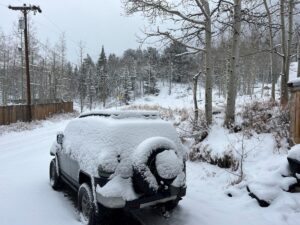
 Winter weather can create dangerous, intimidating conditions on our roads. While beautiful mountain snow and holidays with our families bring us together, we must consider the habits it takes to keep ourselves and our fellow drivers safe throughout the season. I find that preparedness is the key to personal driver safety in the winter. I strongly recommend having the right tires, the right emergency preparedness kit, checking the weather before a drive, and setting serious standards for when to call off an unsafe trip plan. Small habits like making sure to always keep at least a ½ tank of gas in your car can make a life-saving difference.
While there is often much discussion of 4WD vs. AWD vs. 2 wheel-drive cars and their performance in snow, snow tires are considered more impactful than one’s choice in drivetrain. The logic is that 4WD and AWD help you go forward in snow, but the right tires help you to stop. Putting serious winter tires on a 2WD car seriously increases its potential for safe outcomes in snow. The next best choice for safer tires are All-Weather tires.
Setting expectations for how to drive based on where you are headed becomes increasingly important at high altitude. There are a few things to consider for making a high-altitude mountain drive in the winter, especially if you are planning to cross a mountain pass. Expect heavy snow conditions at the tops of mountain passes on snowy days. If you are planning to cross a mountain pass, be sure to check weather conditions and make your best assessment on whether it is safe to attempt or not. High altitude can also create unexpected fog.
Most crashes occur in the snow while driving downhill. Be sure to drive slower while driving downhill in snow, and consider increasing your following distance to closest to two car lengths in front of you. The safest braking technique going downhill in snow is to feather the brake lightly rather than to press hard and consistently. One tip anyone can use to drive safer downhill is use their gear in addition to their brake to slow down. Gearing down to slow can reduce the risk of sliding while slowing down on ice.
One can do everything right as far as preparedness and still wind up in a rough situation. One potential situation worth mentioning is the possibility of being stuck in your car for an extended length of time in freezing temperatures. Here is a list of the most basic items I believe everyone should keep in their car at all times during the winter: extra warm layers (hats, jacket, gloves); water; snacks; small shovel; small pair of traction pads (game-changing self-rescue tool); flashlight; ice scraper; phone battery pack; and if possible, a battery based car jumper like the NOCO boost. I recommend putting everything in a box or backpack for organization.
With the right information and equipment we can set a standard that breeds confidence in the winter, making sure we aren’t on the roads when unsafe and entirely prepared when we do make the decision to drive in snow. I want to wish everyone a safe and healthy new year in 2026, drive safe, and enjoy the beautiful snow.
Sam Shoyer is a ski instructor and outdoor industry entrepreneur who lives in Silver Plume, Colorado at 9,400’ elevation.